
1 L
For topping up on the road.

ARTIKUL: GRM-530-05 MADE IN GERMANY MIJOZDAN: artikul kodlari tasdiqlansin
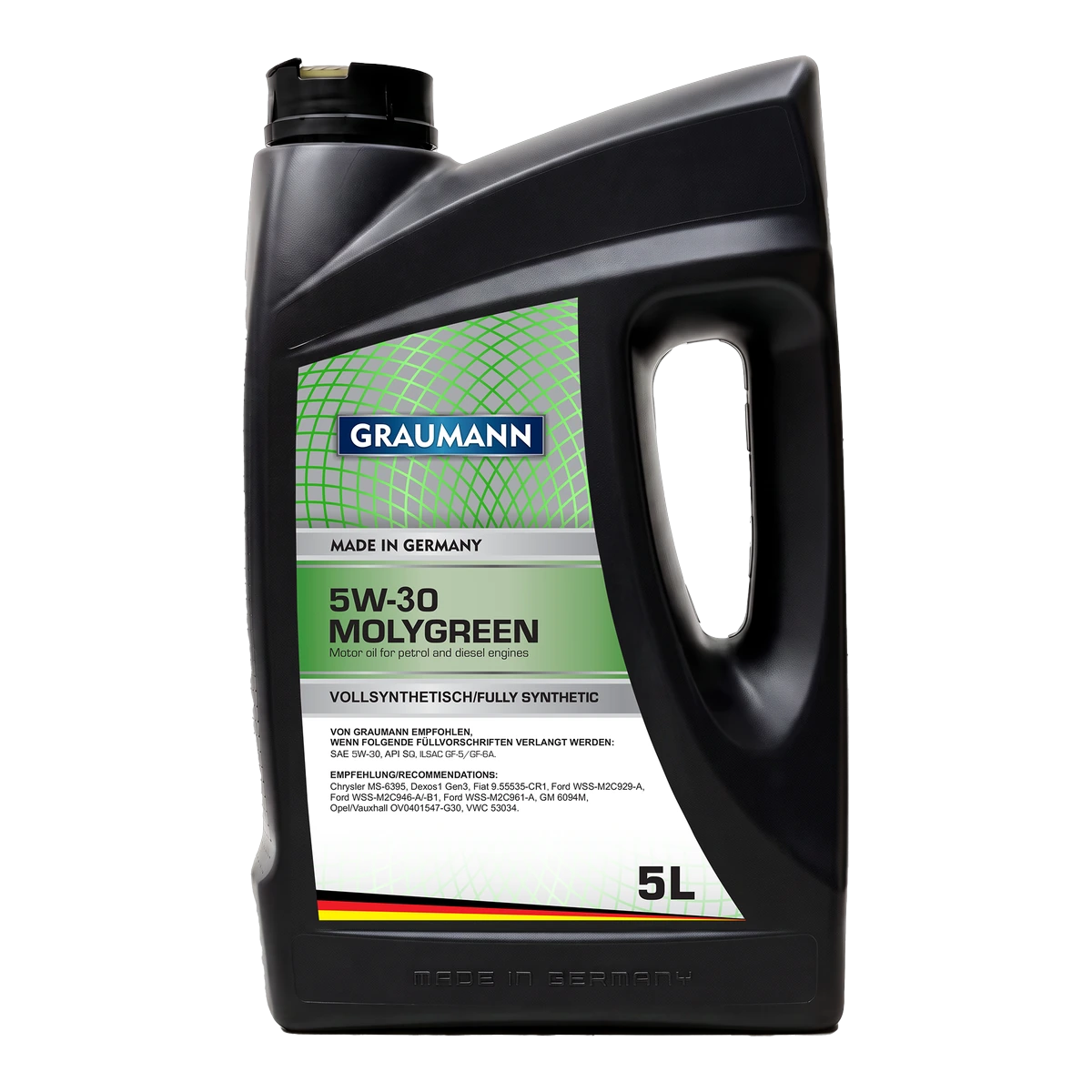
Premium engine oil for the petrol engines of passenger cars. SAE 5W-30.
One change plus a little in reserve.
The confirmed pack size today is 5 L. The range runs from 1 L to 200 L. MIJOZDAN: mavjud hajmlar va har hajm uchun kod.
To German engineering standards.
Two signs on every canister that it has not been opened.
No middlemen. You get this article from the brand owner itself.
| Property | Value | Source |
|---|---|---|
| Viscosity grade (SAE) | SAE 5W-30 | Label |
| Product type | All-season engine oil | Label |
| Base oil type | Fully synthetic | Label |
| Quality grade | API SQ · ILSAC GF-5 / GF-6A | Label |
| Kinematic viscosity at 100 °C | 9.3–12.5 mm²/s | SAE J300 · grade requirement |
| HTHS viscosity at 150 °C | ≥ 2.9 mPa·s | SAE J300 · grade requirement |
| Cold cranking (CCS) at −30 °C | ≤ 6,600 mPa·s | SAE J300 · grade requirement |
| Pumpability limit (MRV) at −35 °C | ≤ 60,000 mPa·s | SAE J300 · grade requirement |
'SAE J300 · grade requirement' means the limit the standard sets for the 5W-30 grade , not a measured value of this product.
The article's measured values (density, viscosity index, sulphated ash, TBN, flash point) are given in the technical data sheet.
Viscosity tells you how the oil flows. The specification tells you its quality and what it suits. Both have to match the service-book requirement.
Kinematic viscosity — how the oil flows at 40 °C and 100 °C. The 100 °C value sets the second figure of the SAE grade; on this article it is 30.
Viscosity index — how much the thickness depends on temperature. The higher the number, the more stable the oil is both cold and hot.
HTHS — viscosity at high temperature and high shear (150 °C). Modern approvals most often set a limit on this figure.
Sulphated ash — the mineral residue left after combustion. In an engine with a particulate filter it matters that this stays low.
TBN — total base number, the reserve for neutralising acids. It matters most with long change intervals and in diesel engines.
Flash point — the temperature at which the oil vapour ignites. The pour point is the temperature at which the oil stops flowing.
The list is taken from the canister label. MIJOZDAN: TDS dagi ruxsatnoma roʻyxati.
The curve shows how a multigrade oil behaves: thicker when cold, thinner as it warms. The figures on the chart are the grade requirement, not a measured value.
SAE J300 requirement: ≤ 60,000 mPa·s. The '5W' mark comes from this test.
SAE J300 requirement: ≤ 6,600 mPa·s. Whether the starter can turn the crankshaft.
Measurement point: the two values at 40 °C and 100 °C together give the viscosity index.
SAE J300 requirement: 9.3–12.5 mm²/s. The '30' in the grade comes from this range.
SAE J300 requirement: ≥ 2.9 mPa·s. Whether the film holds in a hot, loaded engine.
Modern petrol passenger cars: Japanese, Korean and American makes whose service book calls for API SP/SQ or ILSAC GF-5/GF-6A. An SAE 5W-30 viscosity is required.
The General Motors group: Chevrolet, Cadillac, GMC and Opel / Vauxhall. Turbocharged, direct-injection petrol engines with start-stop.
Ford: turbocharged petrol engines in the EcoBoost family and the models that carry this filling requirement.
The Stellantis group: Chrysler, Jeep, Dodge and Fiat petrol engines that carry this specification.
This article is not intended for vehicles that require an ACEA C (low-ash) grade — for example engines carrying VW 504.00 / 507.00, MB 229.51 / 229.52 or BMW Longlife-04.
The list is a guide. The final choice follows the requirement in your vehicle's service book. MIJOZDAN: marka-model-yil kesimidagi toʻliq jadval.
For modern downsized engines with raised output — the heat and pressure on the oil are higher here.
It lubricates the parts.
It carries heat away from where coolant never reaches.
It binds combustion residue and metal particles and carries them to the filter.
It seals the gap between the piston ring and the cylinder wall.
It neutralises the acids formed during combustion.
The 5 before the 'W' is cold flow: a 5W oil stays fluid in the cold and reaches the furthest lubrication point in the engine within seconds.
The second figure, 30, is the thickness at the 100 °C operating temperature: the film is thin, low-friction and does not break under load.
A turbocharger shaft spins very fast and gets hot. The oil must not break down at that temperature, or coke will block the shaft oilway.
Some of the fuel runs down the cylinder wall into the oil and thins it. If the oil is not resistant enough, the film gets weaker.
The engine restarts at operating temperature, and at every stop the oil pressure drops to zero. Until the pressure is back, the bearings run briefly in boundary friction.
The properties 5W-30 follow from the viscosity grade and from what a modern engine oil has to do.
A 5W grade stays fluid in the cold and the pump moves it quickly. Most engine wear happens in exactly those first seconds.
A 30 grade gives a thin, unbroken film at 100 °C: friction is low and metal does not touch metal.
Around the turbocharger and the loaded piston assembly the oil meets high temperatures. A resistant oil does not break down.
The oil binds soot, deposits and metal particles, holds them in suspension and carries them to the oil filter.
The protective layer holds at high-pressure contact points: the valve train, the bearings, the crankshaft.
In a direct-injection engine some fuel reaches the oil; if the oil is not resistant enough, the film thins and pressure drops.
Oil oxidises under heat and oxygen. An oil that ages slowly keeps its properties to the end of the change interval.
The acids and condensation formed during combustion attack the metal. The oil neutralises them.
A micro-seal forms between the piston ring and the cylinder wall. Lose that seal and power falls while consumption rises.
A stable oil evaporates little at high temperature, so it needs topping up less often. The exact evaporation figure TDS dan toʻldiriladi.
For a small top-up (up to 1 L) mixing with another modern engine oil is acceptable; mixing in large volumes is not advised — the full rule is in the questions and answers.
The final choice follows the specification in the service book.
Recommended for vehicles that call for one of the specifications below. The final word belongs to the service book.
Modern petrol passenger cars. An SAE 5W-30 viscosity is required.
Turbocharged and direct-injection engines.
City cars running a start-stop system.
A cold climate, and vehicles started often in the cold season.
Mixed duty: driving where city traffic alternates with the open road.
There is a separate Diesel oils category for diesel engines. The article comes from there.
A motorcycle needs a separate 4T oil carrying a JASO MA/MA2 mark. For trucks, agricultural and construction machinery the oil comes from the diesel category.
A diesel with a particulate filter (DPF) needs a low-ash ACEA C oil. The ash from an ordinary oil builds up in the filter and does not clear even with regeneration.
ACEA grades do not replace one another. Using an A or B where a C is required damages the catalyst and the filter.
A longlife change interval does not follow from the viscosity grade. Only a specific manufacturer approval grants it. Approvals for this article TDS dan toʻldiriladi.
On most passenger cars a full change takes around 3.5–5.5 litres. The exact volume is in the service book.
The service book is the basis: manufacturers usually state 10,000–15,000 km, or once a year. A longer interval comes only from a factory approval. If the real duty is harder, shorten the interval — most often by half.
Constant short trips: under 8 km in normal weather, under 16 km in the cold.
City traffic: stop-start driving and long periods of idling.
Dusty, muddy or uneven roads. Salted roads in winter.
Constant heavy loads. Towing a trailer, climbs and descents on mountain roads.
Taxi, haulage and other commercial duty.
For topping up on the road.
One change on most passenger cars.
One change plus a little in reserve.
For a workshop's daily workload.
For fleets and industry.
If the oil level starts to rise after you fill with this article, the oil is not the cause. Fuel or water is getting into the sump.
A fake can look no different. A GRAUMANN canister carries two security features.
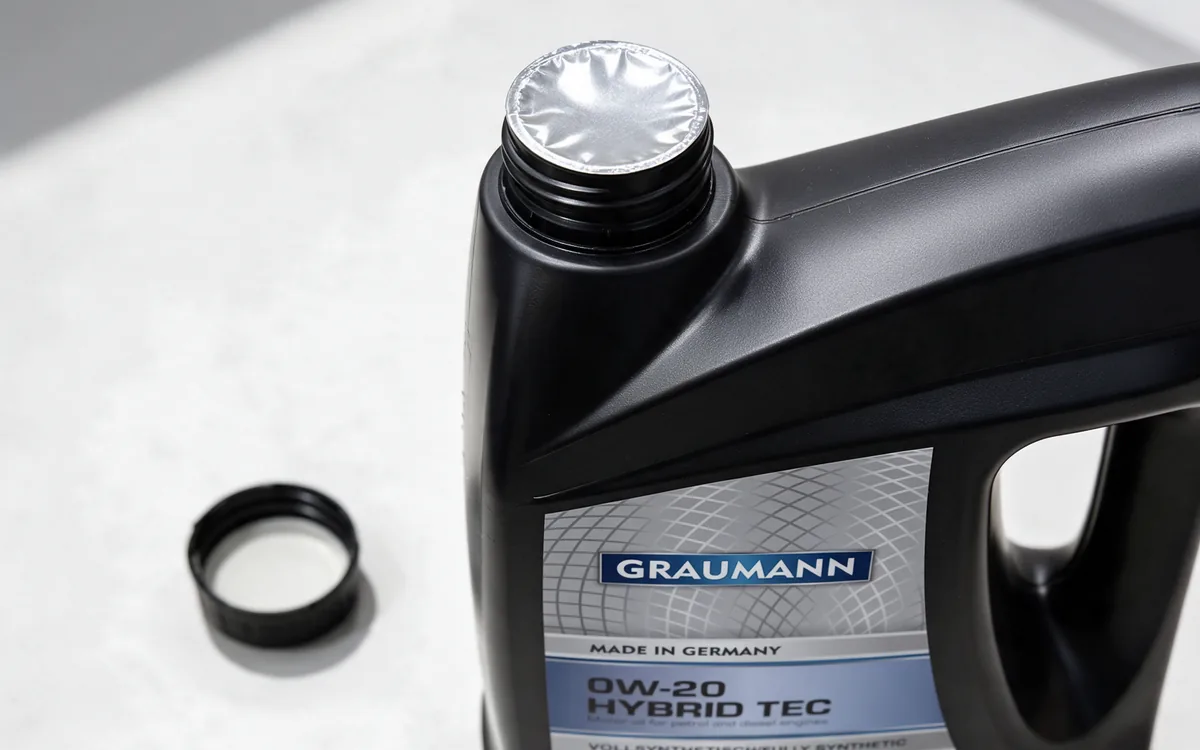
When the cap comes off, the foil must be intact. Pierced, torn or re-glued foil means the product has been opened.
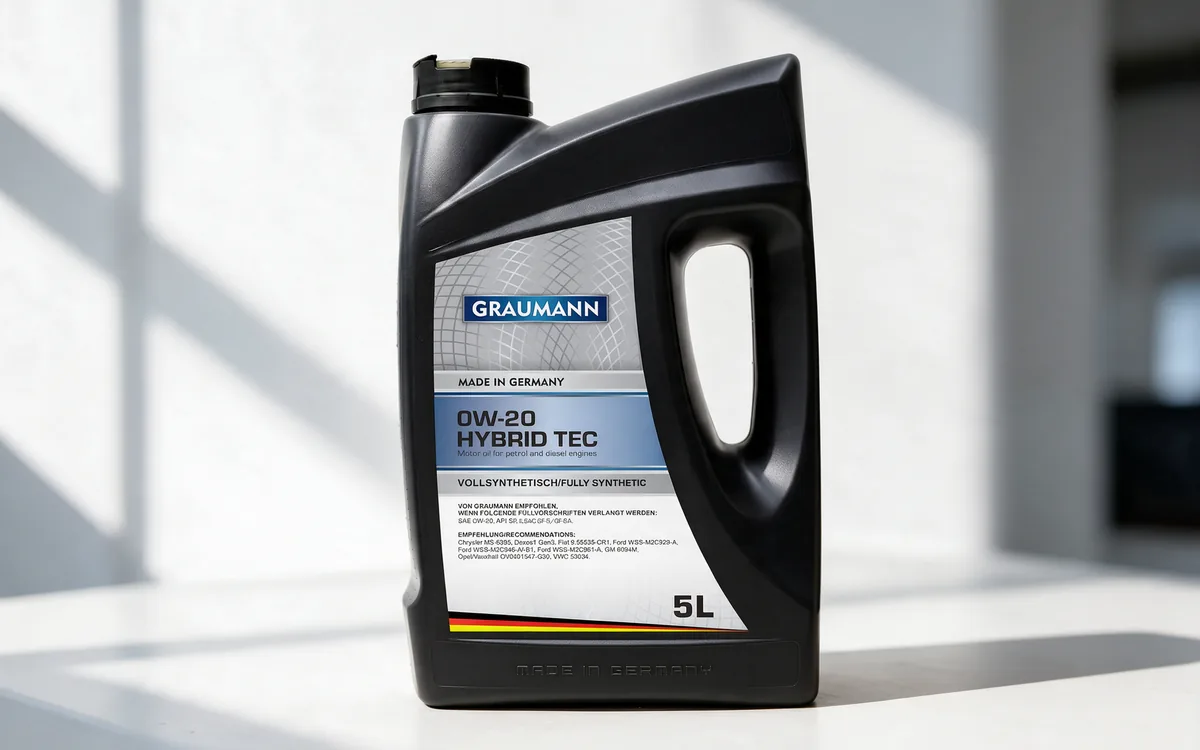
The seal ring breaks the first time it is opened and cannot be restored. A broken or loose seal is reason enough to refuse the goods.
Whether the label is applied straight and the type and colour are crisp.
Whether the canister shape, seams and colour are consistent.
Whether the product came from an official point of sale.
A product bought at an official point of sale carries a warranty. If you need to make a claim, keep the canister and the receipt. MIJOZDAN: kafolat sharti va muddati.
The second flagship is GRAUMANN 10W-40 Molygreen. The difference is viscosity: engine age and load decide.
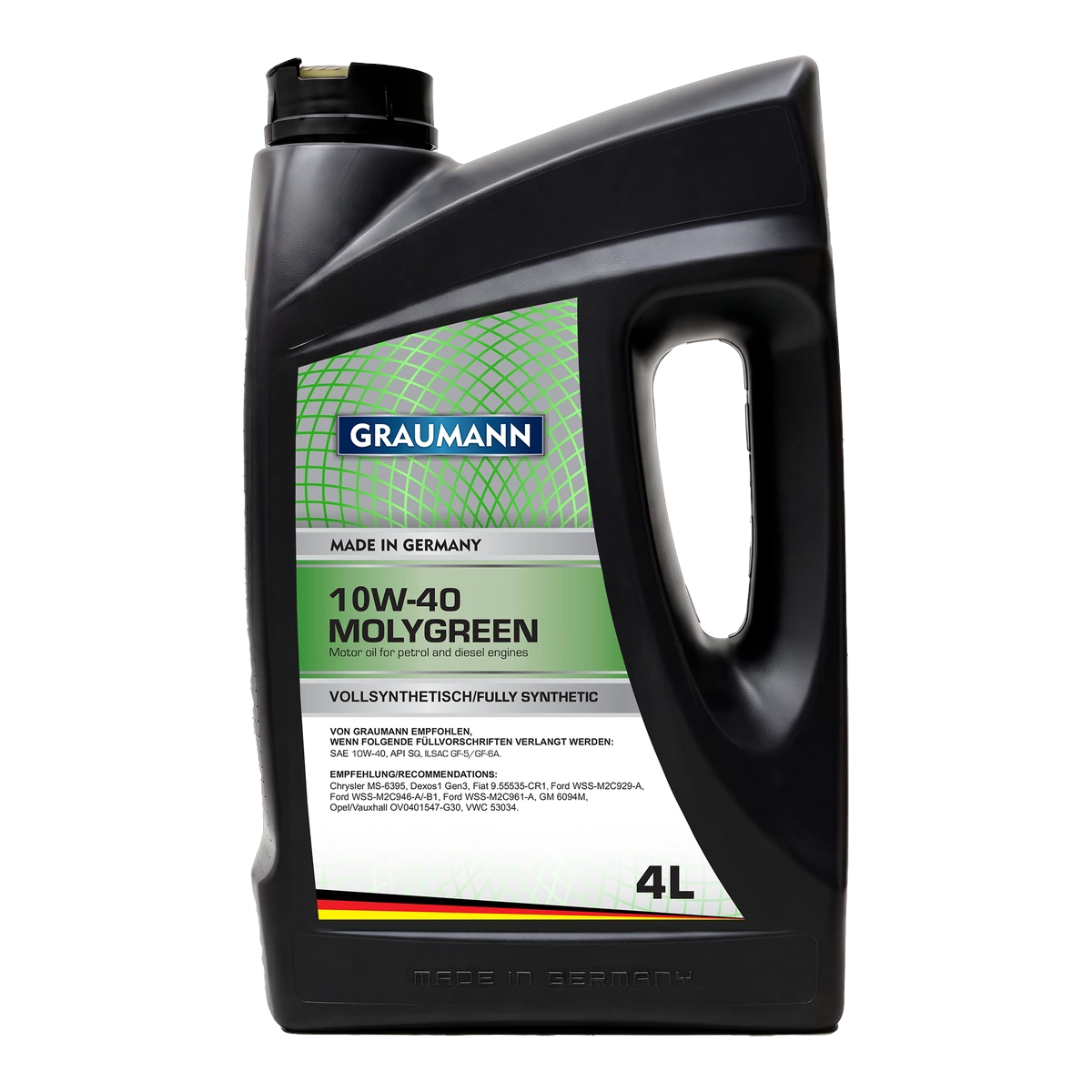
SAE 10W-40 · Engine oil
4 L · MIJOZDAN: qolgan hajmlar
DetailsMIJOZDAN: viskozitet sinfi
MIJOZDAN: hajmlar
DetailsMIJOZDAN: viskozitet sinfi
MIJOZDAN: hajmlar
DetailsMIJOZDAN: viskozitet sinfi
MIJOZDAN: hajmlar
DetailsMIJOZDAN: viskozitet sinfi
MIJOZDAN: hajmlar
DetailsIt arrives quickly on a cold start. At operating temperature it gives a thin, low-friction film.
Gives a thicker film when hot. In the cold it spreads more slowly than 5W-30 .
Both come from the Molygreen range.
The full range is in the catalogue — filter it by viscosity.
View the categoryMade at one of Germany's large plants to German engineering standards. The range is built for the loads of modern engines: turbochargers, direct injection, start-stop.
Five categories, 15 articles, pack sizes from 1 L to 20 L. Engine and diesel oil, transmission fluid, brake fluid, hydraulics. All five from one supplier.